







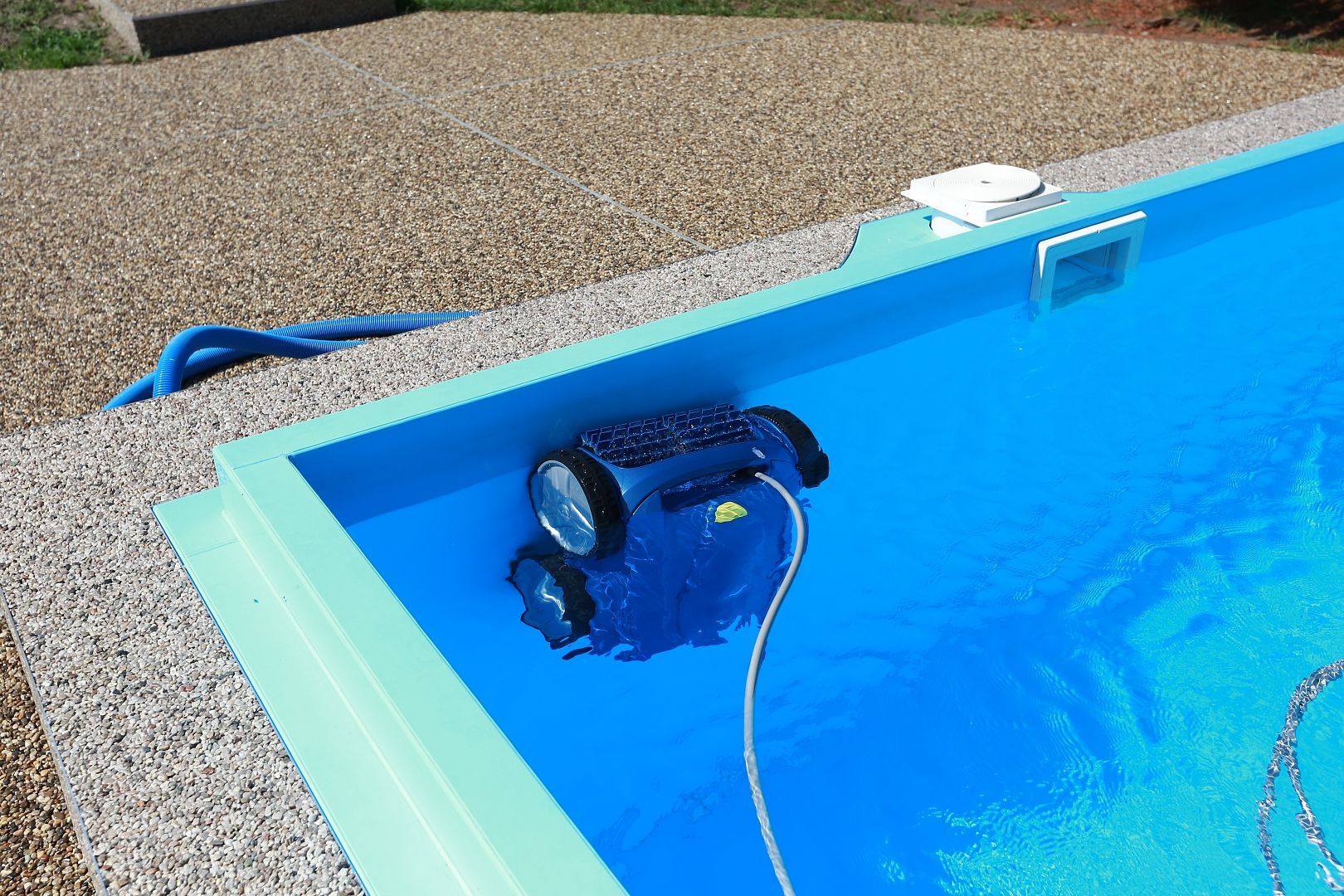
Automatic pool cleaner vs. manual pool vacuum: which one to choose for your pool?
Get rid of dirt in your pool using a manual or automatic pool cleaner for both floors and walls. You will relieve the sand filtration and ensure a clean pool. We will advise you on which type of vacuum to choose and discuss connecting a pool cleaner to a skimmer or to an overflow pool.
What is a pool cleaner?
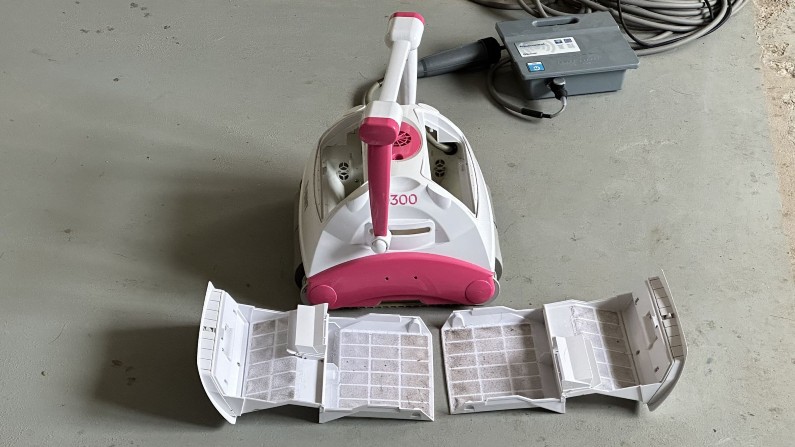
A pool cleaner is a very important accessory for achieving perfectly clean pool water. Its primary purpose is to complete and ease the work of the pool sand filtration and other pool cleaning technologies, which we will discuss below. Its role is to eliminate dirt on the floor and walls of the pool that the pool filtration cannot capture. This debris includes fine particles, sand, or leaves. Vacuuming the floor and walls of the pool is usually necessary once every 2 weeks. When choosing a cleaner, you should decide whether you want a cleaner for the pool floor, its walls, or a combination. Our cleaners can handle both.
Pool floor and wall cleaners are divided into automatic, semi-automatic, and manual. We offer proven automatic and manual cleaners, some models of which we will introduce later.
Where to connect a pool cleaner?
Connecting the cleaner varies slightly depending on the type of pool. For a skimmer pool, the hose is connected via an elbow to the vacuum plate on the skimmer. For an overflow pool, the cleaner hose connects to a suction nozzle in the pool wall. However, with this connection, the water does not flow through the sand filtration, but directly into the waste drain. If your pool does not have an automatic refill system, it is necessary to top up the pool water afterward. For more information on the advantages and disadvantages of overflow and skimmer pools, read our article.
How to hook up a pool cleaner?
Setting up the cleaner is not rocket science. For an automatic cleaner, you connect the necessary hoses. For a manual cleaner, you must also attach a telescopic pole, which you will then use to control it. After that, simply submerge the entire cleaner, including the hoses, into the water. It is best to hold the hose against a return nozzle to easily prime the cleaner with water. A good indication of proper priming is the presence of bubbles around the cleaner.
Next, use an adapter to connect the hose to the skimmer or the suction port. Try to prevent air from entering the hose. If possible, do not lift it out of the water.
Maintenance and service of a pool cleaner
After finishing the pool cleaning, it is necessary to empty the accumulated debris inside the filter bags or baskets. These are then rinsed, for example, under a garden hose. Other parts of the cleaner, such as the lid, inlet flaps, or the filter itself, should also be cleaned with a hose. The wheels or tracks of the cleaners should also be cleaned. In case of any malfunction, we will be happy to provide pool cleaner service as well as service for other pool technologies.
Most common problems with floor and wall cleaners
The most common problems include incorrect connection, the presence of air in the cleaner, stuck debris in the cleaner or hose, or a clogged filtration system. As we already mentioned, when connecting, be careful not to let air into the cleaner and ensure the hoses are sufficiently attached and tightened.
Before vacuuming, check the cleaner itself and remove any dirt. Usually, this involves clumps of hair and grass wound around the wheels or stuck inside the cleaner and hose. If you are connecting the cleaner to the pool filtration, check its cleanliness. The cleaner will not work effectively with a clogged filter.
Automatic pool cleaner
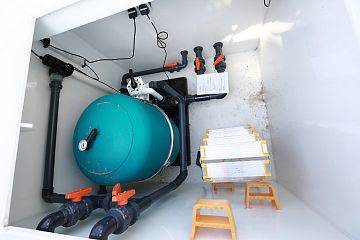
Automatic cleaners are compatible with all pool types and shapes and will greatly ease your work. Modern robotic cleaners have their own drive, pump, and filter bag or basket. Many of them can also be remotely controlled via a mobile app. They are thus completely independent cleaning units.
The advantages of automatic pool floor and wall cleaners include:
- independent pool cleaning
- easy operability
- powerful turbine
- excellent suction power
- compact design
- quiet operation
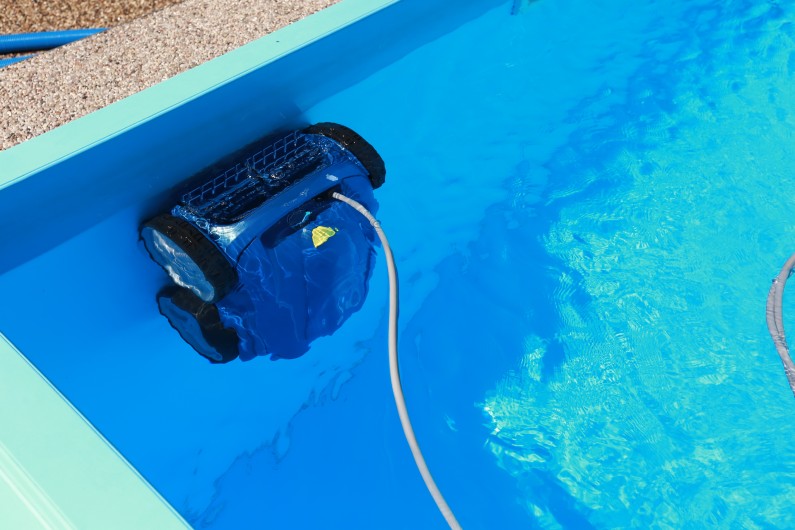
How does a robotic pool cleaner work?
An automatic pool cleaner works similarly to a household robotic vacuum. However, instead of dust and hair, it collects deposits, leaves, and grass on the floor and walls of the pool. Using internal programs, the cleaner can map the terrain and surface of the pool and then clean it. Thanks to large wheels or tracks, it can handle obstacles, uneven surfaces, and climbs on plastic, as well as tile or concrete pools. It contains a turbine in its body that uses constantly moving flexible blades on the intake side. On the underside of the cleaner, flaps adapt to the terrain, creating a suction channel in the center of the cleaner.
Our range of automatic cleaners
We offer a range of proven automatic pool floor cleaners for salt water, as well as for chlorine and chlorine-free water treatment. Among the best-selling pool cleaners are, for example, the Zodiac AQUASPHERE ASR 105 or Fairland X30. For these, we recommend purchasing a floating hose 3+1, 11+11, or a safety valve. This controls the pump suction and, as soon as the suction port is blocked, moves the full flow to the adapter. Purchase an automatic pool cleaner with service from us. Just contact us.
Zodiac AQUASPHERE ASR 105
This model is suitable for cleaning pools with a surface size up to 9 × 4 m. It became one of our favorites thanks to its patented cyclone suction technology, which allows for a wide suction path. Other great features include easy control, trouble-free filter access, low weight, fast water drainage, smooth movement, easy handling, and an intuitive control panel.
Fairland X30
This cordless battery-powered cleaner can vacuum a pool up to 12 × 10 m in size. Thanks to the patented intelligent cleaning system "3D S path," the cleaner maps the pool space perfectly. The cleaner does not move randomly across the pool but carefully cleans spot by spot. Its benefits also include easy maintenance.
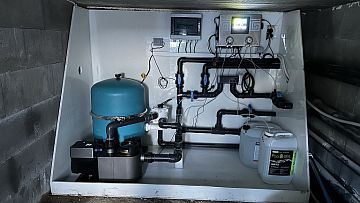
Manual pool cleaner
Manual cleaners can be divided into classic manual (using a pool pump) and manual cordless cleaners. The fundamental difference is that with classic cleaners, dirty water is vacuumed into the drain and partially into the sand filtration. After vacuuming the pool, it is therefore necessary to backwash the sand filter. Part of the water is thus used for the wash and must be refilled into the pool.
The second option is manual cordless cleaners. In these models, water and dirt are filtered through a filter in the cleaner, so the water remains in the pool. The cleaner itself uses only a negligible amount of water to rinse the filter.
Cleaning the pool with a manual cleaner cannot be done without your effort. You have to vacuum the floor and walls of the pool yourself. Nevertheless, many clients choose a manual cleaner.
Advantages of a manual cleaner include:
- low price
- personal control over the cleaning
- simple operation and maintenance
- silent operation
- works without electricity
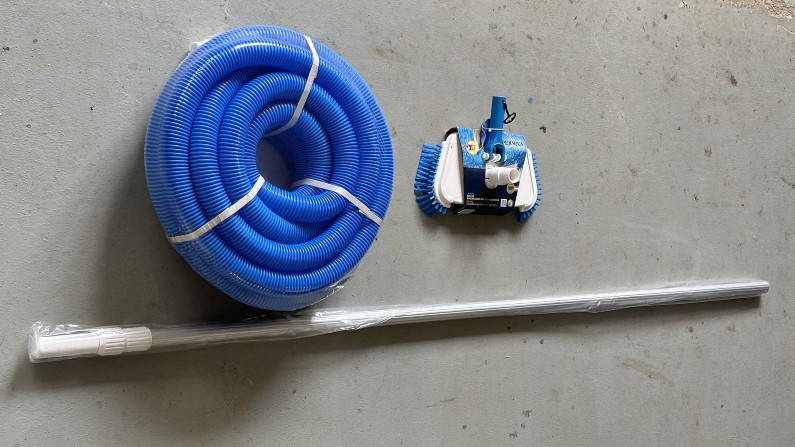
Our favorite manual cleaner models
Which manual cleaner models do we consider the best pool cleaners? For undemanding customers, our simple and easy-to-use manual cleaner is perfectly sufficient. It consists of a hose, a brush, and a control pole.
Manual cordless cleaners from BWT
Over the years of our practice, BWT cleaners have proven themselves. These are very powerful rechargeable manual cleaners for all pools and hot tubs that work without a cord or hose. While vacuuming, you can either hold them in your hand or attach them to a telescopic pole. These manual cleaners can vacuum for 40 to 70 minutes on a single charge. We can recommend, for example, the BWT BC50, BWT X-flow, or BWT PK Giant models. The BWT PK Giant model also features a unique patented double filtration system.
Bet on years of experience and get in touch with us. We will be happy to advise you not only on choosing a pool cleaner or pool equipment, but also on the plastic pool itself or a wellness pool.
Other helpers for pool cleaning
To keep the pool clean, you will also need other pool technology and pool accessories. No clean pool is complete without a pool enclosure or a pool cover. We provide single-track and double-track enclosures, as well as atypical enclosures for custom pools. Alternative solutions include safety, solar, or winter pool covers. The pool cleaning itself cannot do without the aforementioned sand filtration, which removes sand, grains of soil, or grass from the water. More reasons why to get sand filtration can be found in our article.
In addition to removing visible dirt, bacteria and microbes must also be removed from the water. For this, chlorine or chlorine-free water disinfection is used. Chlorine in pools is traditionally used for public swimming pools, but also for private pools. However, for many people, chlorine disinfection causes a chlorine rash or they manifest a chlorine allergy. Therefore, customers often choose one of the methods of chlorine-free pool water treatment. We have, for example, a UV lamp or an ozone sterilizer available. Learn more about water treatment methods in our article.
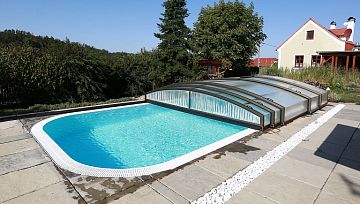
Plastic pools with all accessories from Morava Ekol
If you like luxury and don't mind paying extra for it, then we recommend automatic cleaners, which practically clean the pool for you. Otherwise, a manual cleaner is enough, which requires your time and energy, but you oversee the precision of the pool cleaning yourself.
Whether you need to buy any pool technology or accessories, including the pool itself, we are here for you. We have been involved in plastic production for more than 30 years. In our offer, you will find plastic pools, WWTPs, oil and hydrocarbon separators, or all kinds of plastic tanks and sumps. Are you looking for a manufacturer of an atypical custom plastic product? We can help with that too. Also, explore our blog, where you will find many useful tips. For example, how to choose a pool or a comparison of intelligent control and pool switchboards. We are here for you. Get in touch with us.
Latest articles from the blog
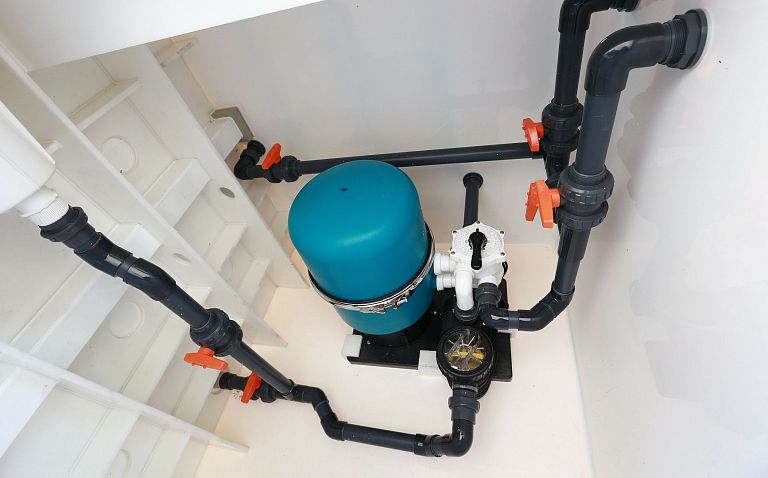

Sand filter for swimming pool or water purification without chemicals
No pool can do without sand filtration. It easily removes grass, leaves, pebbles, or grains of soil. Discover its benefits and…
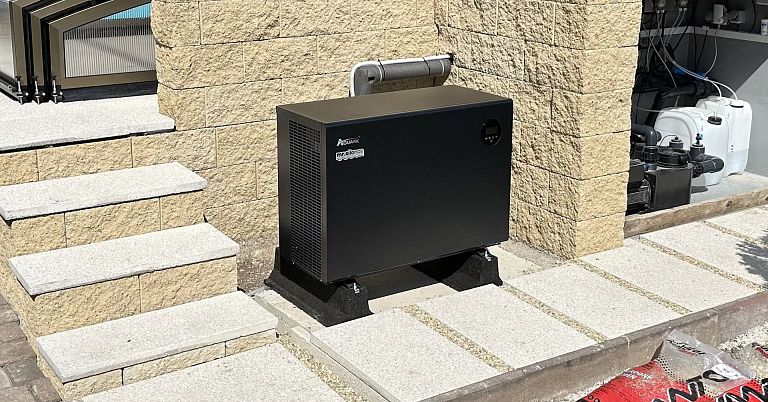
Pool water heating - which heating method is right for your pool
Do you want to extend your pool season or relax in the warm water? The water heater makes it easy to do so. Find out what water…